WorkPulse Basic
Your assigned work. One screen.
Open Jira, launch WorkPulse, and every ticket assigned to you is right there —
update status and log time without board-hopping.
- All assigned issues gathered in one place
- Change status directly from the board
- Log time without hunting projects
- No timers pool, billable export, or Advanced lead tools
See WorkPulse Basic
WorkPulse Standard
Everything in Basic — plus time muscle.
Same one-click gather. Now with automatic timers, a billable Time Log you can
export, and personal goals — still built for the person doing the work.
- My Week — issues by project and due date, ready to update
- Automatic timers — 300 starts / org / month into the Jira work log
- Time Log — day-by-day hours, totals, billable %
- Export — CSV, Excel, PDF, Word, JSON, text, Markdown, HTML
- Personal goals — required hours and billable targets
Try WorkPulse on Marketplace
WorkPulse Advanced
See where the team’s effort goes — before it becomes a fire.
Advanced is built for leads who need a live read on team energy: who is logging,
what is billable, who needs approval, and which tickets are drifting — so you
discover issues from effort patterns before they are delivery problems.
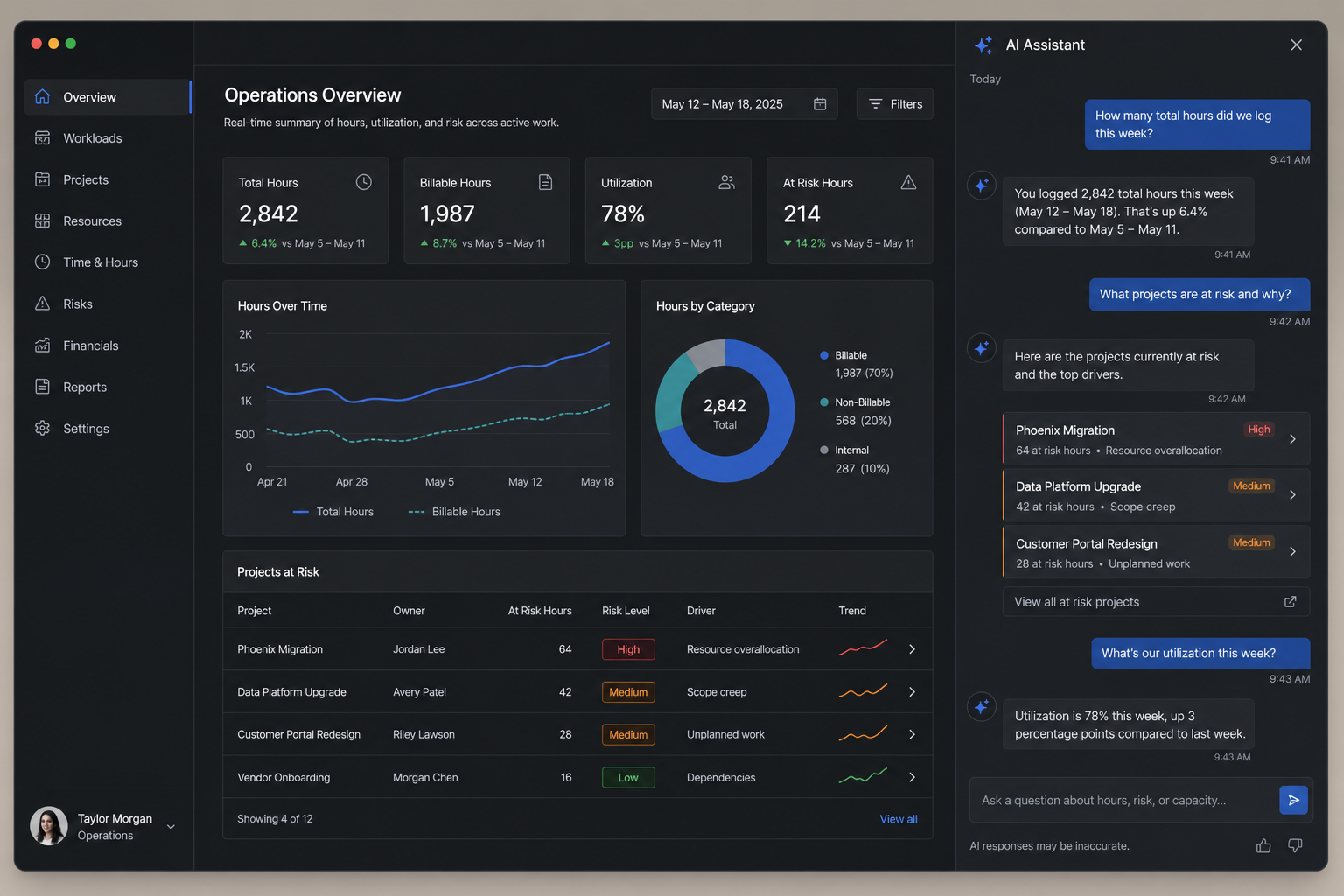
- Team Pulse — approvals, wellness signals, billable mix, hours vs goal
- Risk Board — past due, overruns, capacity stress, resolve & review
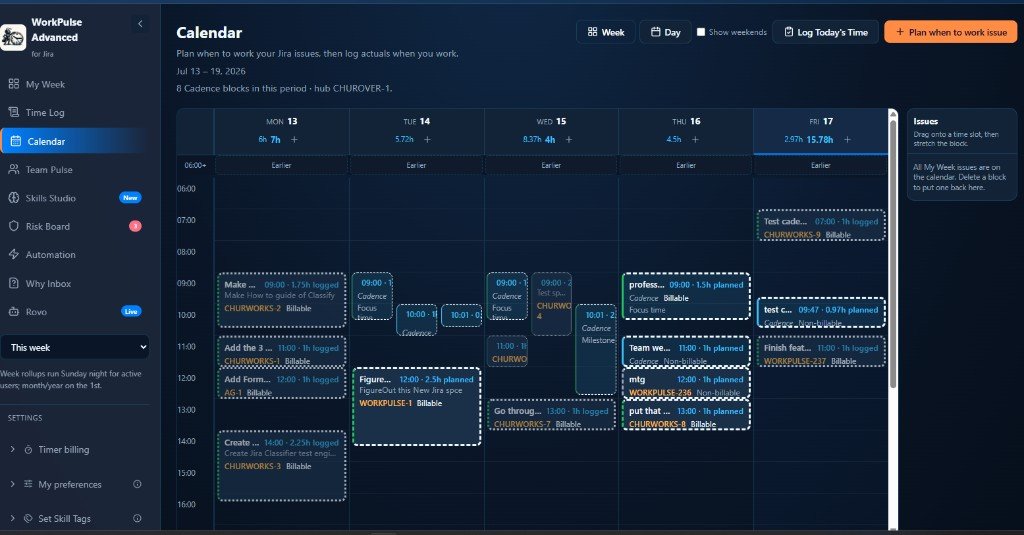
- Calendar — plan assigned work across the week, then log actuals
- Unlimited multi-timers — up to 8 open; no 300/month org pool
- Automation, Skills, Rovo — act on signals and ask ops questions in context
Compare Standard vs Advanced